Ofsted Report January 2023
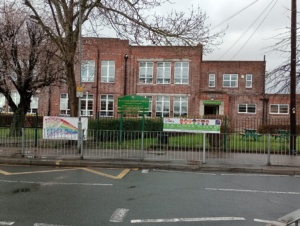

Inspection of Wickford Primary School
Market Road, Wickford, Essex SS12 0AG
Inspection dates: 10 and 11 January 2023
Overall effectiveness – Good
The quality of education – Good
Behaviour and attitudes – Good
Personal development – Good
Leadership and management – Good
Early years provision – Good
Previous inspection grade – Good
What is it like to attend this school?
Pupils are happy and friendly. They love their learning and are proud of their school. Pupils appreciate the rainbow values. Pupils learn from these values. They learn resilience and grow to become responsible and active citizens. Pupils celebrate each other’s achievements and are keen to do their best. Pupils become confident learners and members of their school community.
Pupils understand the high expectations leaders have for their learning and their behaviour. Consequently, most pupils behave well, in lessons and around the school. In early years, children settle in quickly and develop positive relationships. Teachers encourage children to become independent learners right from the start.
Pupils feel safe. Pupils know that adults listen to them. Adults act promptly to help pupils resolve any worries or concerns they may have. Pupils state that bullying is rare. If it happens, adults deal with it promptly.
Pupils enjoy many different clubs. Pupils benefit from trips and visitors that help them make connections in their learning. Pupils develop their leadership skills through a range of leadership roles such as rainbow ambassadors and play leaders.
What does the school do well and what does it need to do better?
Leaders have put in place an ambitious curriculum. Leaders have carefully considered and set out the knowledge that pupils should learn in all subjects and year groups. Curriculum documents identify the key vocabulary that pupils need to learn as they progress through the curriculum. Pupils enjoy learning. In most subjects, pupils learn more and remember more. They achieve well across a broad range of subjects. They are well prepared for the next stage of their education.
In a small number of subjects, such as design and technology and history, leaders have recently developed the curriculum. Some staff are still getting to grips with how best to deliver the curriculum.
Leaders have prioritised reading. They have adopted a systematic approach to teaching phonics and early reading. Children start learning to read as soon as they join the school. Daily practice helps pupils to secure their phonic knowledge. Pupils who are at the early stages of reading have books that are closely matched to the sounds they have learned. This helps them to quickly become confident and fluent readers. Teachers give pupils who are less confident readers the help they need to catch up. Staff share their love of reading. Pupils enjoy reading and being read to. Pupils talk enthusiastically about books. They read widely, at school and home.
Leaders quickly identify the needs of pupils with special educational needs and/or disabilities (SEND). Staff are well informed about pupils’ individual needs. Staff adapt the curriculum so that pupils with SEND can access the full range of subjects. Pupils with SEND achieve well.
Leaders and governors regularly check the impact of the curriculum and how it is taught in reading and mathematics. However, leaders and governors recognise that they need to monitor other subjects to understand the impact of the curriculum more broadly.
In the early years, children begin to learn phonics and mathematical skills as soon as they join the school. As a result, children in reception show good phonics skills in their writing books. They can write simple words and sentences using the learned knowledge. Teachers give children opportunities to practise counting and develop their sense of number. There are warm relationships between adults and children.
The school’s Rainbow values and curriculum support pupils’ personal development well. Pupils develop resilience and perseverance. Pupils learn about different faiths and cultures. They learn tolerance and respect and celebrate each other’s differences. Pupils’ views are regularly sought on how to improve the school through systems of voting. This helps develop pupils’ understanding of democracy and prepares them for life in modern Britain.
Leaders care for the well-being of staff and consider their workload. Staff feel well supported. The recent federation with the local secondary school has strengthened the transition between primary and secondary education for the pupils moving on to the partner school.
Safeguarding
The arrangements for safeguarding are effective.
Staff receive regular training. Clear safeguarding procedures are in place. They are well understood and followed by staff. Safeguarding records are kept securely and monitored regularly by leaders, including governors.
Pupils feel safe. They are taught how to keep safe, including online. Pupils know what bullying is. They can name several types of bullying. Pupils know how to get support if they have any concerns or worries.
Inspection team
Ania Vaughan, lead inspector – Ofsted Inspector
Michael Thomas – Ofsted Inspector
Steve Mellors – His Majesty’s Inspector